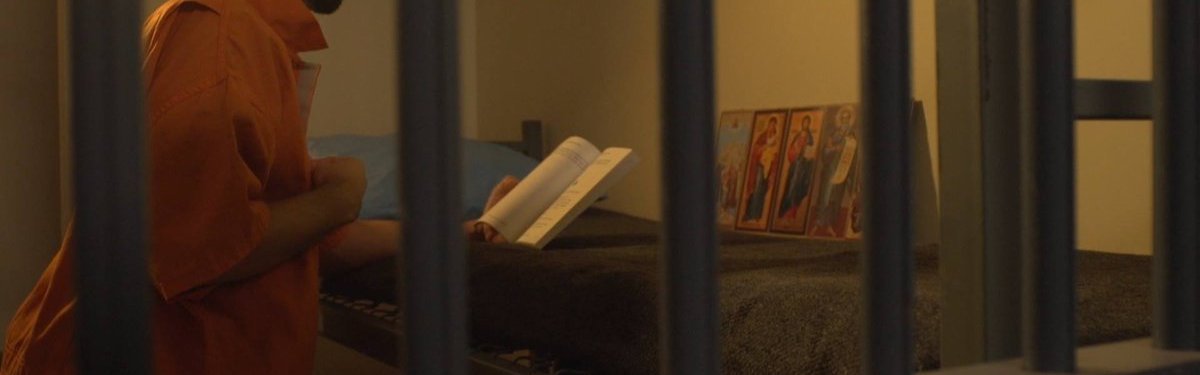

OYM recently spoke with Diana Emry, Director of Programs for Orthodox Christian Prison Ministry (OCPM), about her journey into Orthodoxy and her work serving those in prison. What began as a personal desire to live out Christ’s call in Matthew 25 has grown into a vocation centered on presence, relationship, and compassion. In this conversation, Diana shares how OCPM brings the life of the Church to those behind bars, the challenges and beauty of this often-overlooked ministry, and why simply showing up, listening, loving, and being present can become a powerful encounter with Christ for both those who are incarcerated and those called to serve.
OYM: Please share a bit about your background—your upbringing, your journey to the Orthodox Church, and what you do now.
Diana: I grew up in Montana as an Air Force kid, and I didn’t grow up practicing any particular religion. My journey to the Orthodox Church really began in adulthood. As a single mom, I started exploring faith more seriously — I attended some non-denominational churches and eventually spent time in the Catholic Church as well.
After a few years of searching, I met someone who was Orthodox. We became friends, and they invited me to attend services and events. I was immediately drawn in — the iconography, the prayers, the liturgy — it all deeply resonated with me.
In 2019, I began attending St. Basil the Great Orthodox Church in Hampton, Virginia, with my two children. Not long after, during the COVID period, we were received into the Church through Chrismation. We’ve been part of the Orthodox Church ever since.
Professionally, I now serve as the Director of Programs for the Orthodox Christian Prison Ministry.
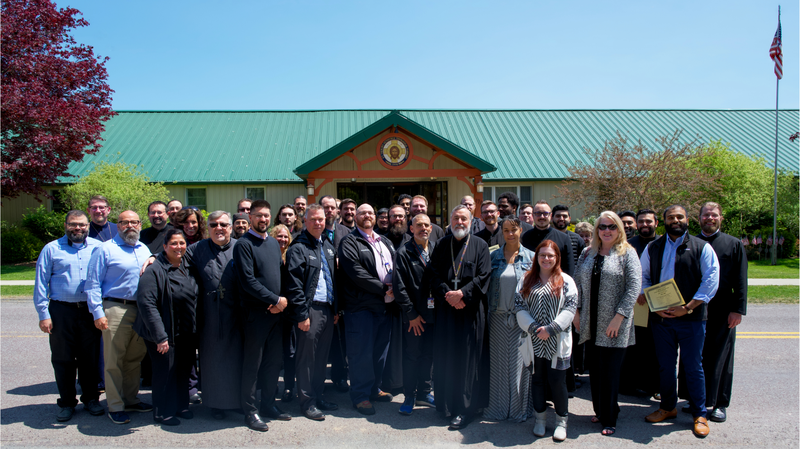
OYM: Could you tell us more about the Orthodox Christian Prison Ministry—how it began and the story behind it?
Diana: The Orthodox Christian Prison Ministry (OCPM) was founded through the work of Fr. Duane Pederson. Before becoming Orthodox, he was part of the Jesus People movement in Hollywood during the 1960s and ’70s. That experience shaped his deep compassion for people on the margins—those struggling, forgotten, or caught in cycles of incarceration.
After becoming Orthodox in the 1990s and eventually being ordained a priest, Fr. Duane began visiting prisons regularly. He focused especially on those serving long sentences—people on death row or those who had been largely abandoned and had little to no outside support. He became a steady presence for them, offering pastoral care, spiritual guidance, and simply companionship.
His work gained recognition and support, and eventually, under Metropolitan Philip, the ministry grew into a national organization as an official agency of the Assembly of Canonical Orthodox Bishops of the United States.
Over time, the ministry expanded beyond in-person visits to include correspondence—writing letters, sending books and prayer materials, and offering spiritual mentorship to those in prison.
I joined OCPM in 2020. By that point, Fr. Duane was older and no longer able to carry the full weight of the ministry. One of the individuals he had ministered to while incarcerated later joined him in continuing the work, especially through correspondence.
After Fr. Duane’s passing in 2022, our focus has been on preserving and continuing his legacy—what we often call a “ministry of presence.” Today, we have a dedicated team working to meet the spiritual needs of incarcerated individuals across the country, ensuring that they are not forgotten and that they remain connected to the life of the Church.
OYM: Was there a specific moment when you realized that being part of prison ministry was your calling?
Diana: Yes, there really was. It actually goes back to when I first became a Christian as an adult. I remember encountering Matthew 25—that call to live out your faith by seeking Christ in others, especially those who are suffering or forgotten.
At the time, I was living in Portsmouth, Virginia, which is a fairly rough area, and I had grown up around people who had been in and out of jail. So the idea of visiting or connecting with people in prison didn’t feel distant to me—it felt very real and very possible.
I also enjoyed writing, so I began corresponding with people in prison through a Protestant pen-pal program. By the time I discovered Orthodoxy, I already had several pen pals. And when I encountered the Orthodox Church, I remember thinking: this is something they need to encounter too—this is something we all need.
So I started searching for Orthodox resources for people in prison and found the Orthodox Christian Prison Ministry. I was struck that the Church had a dedicated organization for this. Even before I was officially received into the Church, I remember thinking, I really hope that someday I can be part of this work.
That moment stayed with me, and a couple of years later, I began working with OCPM—initially part-time, helping with data—and eventually stepping more fully into the ministry.
OYM: Do you think OCPM addresses a specific need within the Orthodox Church today? If so, how?
Diana: Absolutely. One of the biggest needs it addresses is helping the Church broaden its understanding of who our community really is.
Every community has people who are incarcerated—whether we realize it or not. But often, they’re completely out of sight and out of mind. You can go to a parish and ask, “Where is your local jail?” or “Is there a prison nearby?” and many people won’t know. And yet, there may be a facility just 30 or 45 minutes away, filled with people—some serving life sentences, some on death row—who are largely forgotten.
OCPM helps bring that reality back into focus. It reminds the Church that these individuals are not “somewhere else.” They are part of our community. And beyond that, many people in our parishes have loved ones who are incarcerated, even if it’s something rarely spoken about.
On the other side of that, for those who are inside prison, we aim to be the presence of the Church. Right now, we see many people encountering Orthodoxy for the first time—people who can simply search online, walk into a parish, and begin their journey. But those in prison don’t have that same access.
So we try to be that “open door” for them. Through correspondence, resources, and pastoral care, we help them encounter the faith, ask questions, study, and grow. And when possible, we help connect them with clergy—whether that means preparing for baptism or bringing someone back into the sacramental life of the Church.
Ultimately, our goal is to ensure that there is no real separation—that those inside prison and those outside remain united in the life of the Church.
OYM: Could you walk us through what a typical day looks like for you as Director of Programs—specifically your role and what that work involves?
Diana: The foundation of our work still revolves around correspondence. Every week, we receive letters from people in prison. At the beginning of the week, I might open my dashboard and find that we’ve received 60 or 70 letters.
These come from all over the country—some from people we’re already in contact with, and others from individuals who have just heard about us or about Orthodoxy. We also hear from family members or friends of those who are incarcerated and are seeking help on their behalf.
So, the core of our day-to-day work is responding to these direct requests and communications. We have three staff members—our Prisoner Support Managers—who work full-time ministering to these individuals through correspondence. One of my first responsibilities is making sure all incoming letters are distributed to the appropriate team members so they can respond.
That might include writing back, sending books, providing study courses, mailing church calendars or prayer services like an akathist—whatever is needed to meet the spiritual needs of the person on the other end.
Another major aspect of our work involves coordinating with clergy. We have many people in prison who are converting to Orthodoxy, so part of our day-to-day is identifying priests who can visit them in person. That means finding clergy who are geographically close to a facility and willing to go in, meet with individuals, catechize them, and, when appropriate, baptize them. It’s truly a labor of love.
On the other side of our work, we focus on church engagement. I oversee a Church Programs Manager, and together we work to connect with parishes and get them involved at the local level. This includes meetings, trainings, and developing programs that help churches participate in prison ministry. There’s a lot of communication involved in maintaining those relationships and keeping parishes engaged.
OYM: What are some of the challenges you face in your role, or in prison ministry more generally?
Diana: One of our biggest challenges goes back to something I mentioned earlier—the “out of sight, out of mind” reality of prison populations. When people think about ways to get involved in the Church, prison ministry often ends up being overlooked or pushed to the margins.
It can feel intimidating. People don’t always see it as accessible, and sometimes it even feels a bit scary. So one of our main challenges is helping the Church become more aware that we exist—that we’re a resource—and helping parishes understand that this is part of their mission.
We want churches to feel equipped, confident, and comfortable engaging in this work. That’s really where we focus a lot of our efforts: inviting the Church into this ministry and showing that it’s both possible and essential.
At the same time, there’s no shortage of need. We have a large and growing number of people in prison reaching out to us—probably at least 200 new individuals every year.
So another major challenge is simply keeping up with that demand. The need is great, and responding to it faithfully takes a lot of time, care, and resources.
OYM: Our audience is primarily young people—often those just coming out of university, typically in their early 20s to late 30s.
A lot of people in that stage of life are trying to find their place in the Church. Many of our readers express feeling a bit lost or lacking guidance, especially with the pressures of the secular world. At the same time, they have so many gifts and talents.
So based on your experience with Orthodox Christian Prison Ministry, what advice would you give to someone who wants to start a ministry, get involved in one, or use their gifts to serve the Church?
Diana: I think young people bring one of the most important qualities to this kind of work, which is energy.
Prison ministry, in particular, isn’t something you can just step into easily. There are a lot of barriers—you have to make calls, show up consistently, and be persistent just to gain access and build something meaningful. That takes time and energy, and young people are uniquely equipped for that.
If someone is looking for a place to channel that energy, prison ministry is a great opportunity. It’s one of those areas that is really wide open—people inside are simply grateful for presence. They’re not expecting perfection; they’re just looking for someone to show up authentically.
At the end of the day, this isn’t a ministry where you need to feel like an expert or have everything figured out. It’s really about asking: Will you show up? Will you be present? Will you listen? Will you love?
Those qualities—humility, openness, and a willingness to listen—are things many young people already have, especially in that stage of life where they themselves may feel uncertain or vulnerable. And that humility is actually exactly what this kind of ministry needs.
I would also add that prison ministry is very communal. It’s not meant to be done alone—we strongly encourage people to get involved in groups. So for young adults who are looking for meaningful ways to spend time together, to build friendships, and to serve at the same time, this is a beautiful opportunity.
It becomes something you carry together—sharing the responsibility, supporting one another, and growing alongside each other while serving others.
OYM: Do you have any concluding thoughts you’d like to share—whether it’s something on your heart or even where our readers can find more information about OCPM?
Diana: A couple of things come to mind. First, I would encourage everyone to check out our website at theocpm.org. There, you’ll find everything you need to know about what we do and how you can get involved.
We’ve also recently released a book called Suffer with You, which is a collection of essays on forgiveness. It’s especially meaningful for Lent, but really valuable at any time of year. You can find information on how to order it through our website. I’ve read it myself, and it’s incredibly moving—I’d definitely encourage people to check it out.
As a closing thought, I’d say that our ministry really centers on what we call the ministry of presence. This is the idea that healing happens through relationship—that what people need most is to be seen, known, and loved.
At OCPM, we’re not primarily focused on material support. We’re focused on meeting the spiritual and human needs of those in prison—simply being present with them, building relationships, and reminding them of their dignity as persons.
That’s what makes this ministry so powerful. The healing truly goes both ways. When Christ says, “I was in prison and you visited me,” that becomes very real. Anyone who has participated in prison ministry will tell you that you receive far more than you feel you give.
You never go in thinking you have something impressive to offer. Most of the time, you feel like you’re just showing up—and that’s enough. And yet, when you encounter people inside, hear their gratitude, and witness the impact of simple presence, you begin to realize that Christ truly is there.
It strengthens your faith. It encourages you. And it reveals something deeper—that the divide between those on the inside and those on the outside isn’t as great as we think. We are all on the same road, all working out our salvation, all striving to live lives of repentance.
And in that, we can walk together.
Sign in to your What's Your Ministry account. Having trouble? Reach out to info@theoym.org .
To continue taking this course, please purchase access. If you believe this is an error or need help, contact info@theoym.org .
You don't currently have access to this course. To request access, click the button below or email us at info@theoym.org with the subject line "Request Access" and we'll get you set up.
Request Access